If you are a Program Manager or Project Manager thinking about becoming a Technical Program Manager (TPM), this article breaks down what actually changes between the roles and what it takes to make the transition from Program Manager to TPM in a practical way. It walks through where your current strengths as a project manager already apply, where the gaps typically are, and how to build the technical depth needed to operate in more complex engineering environments. You will get a clear view of what TPMs really do, how technical you need to be, the kinds of projects that help you transition faster, and how to position yourself for the role, whether you’re aiming for an internal move or preparing for interviews.
People who are strong Program Managers(PM) usually ask me this question when they are deciding on career growth options. They have already run complex initiatives, managed cross-team dependencies, and kept large efforts moving forward. Their gut instinct is that they can do the job and want to make the transition as the TPM roles typically offer higher pay and will increase their skill set. I’ve hired, promoted, and mentored a number of TPMs across different companies. The transition is less about learning a brand new role and more about adding technical depth to the program leadership skills you already have. Keep reading as we dive into the overlaps, the differences and how to make the transition. If this article doesn’t cover your questions, reach out for a 1on1 consultation.
What Program Managers Do
Strong program managers sit at the center of execution. They align teams, break big initiatives into milestones, manage risks and dependencies, and make sure cross-functional work is delivered on time. When something spans multiple orgs, the Program Manager is usually the connective tissue keeping it from falling apart. These skills are the reason many program managers successfully move into TPM roles. The execution muscle is already there.
Most of them already have a PMP certification and a track record of driving delivery. They don’t necessarily come from an engineering background, and for classic program management, they don’t need to. They tend to have excellent stakeholder management, conflict resolution skills, are very organized, great on followups and documentation.
Why the Technical Program Manager Role Exists
As engineering organizations grow, programs become more complex. You start seeing initiatives that involve infrastructure, distributed systems, data platforms, or large scale architectural changes. These programs require someone who can not only drive execution but also engage meaningfully in technical conversations across multiple tech teams and their respective architectures. The tough decisions, risks and conflicts arise around technical constraints and scalability of architecture. That’s where the TPM role typically sits.
TPM roles are common in team which deal with Cloud infrastructure, Platform engineering, build distributed systems, use AI and ML platforms, create developer platforms and internal tooling, or program that involve large migrations or system modernization efforts
In these environments, understanding why something is technically risky matters as much as tracking whether it is on schedule. Most of the major risks are technical. The vocabulary is technical. The tradeoffs are technical. A program manager who cannot engage and contribute at that level will hit a ceiling fast, which is why the T is necessary. The TPM role builds on top of the program manager skill set.
Where Program Managers and TPMs Overlap
Before focusing on the differences, it’s worth recognizing how much overlap there is. Strong TPMs are expected to have core program management skills and experience.Every strong TPM is a strong program manager first. Planning complex initiatives, aligning teams, managing risk, communicating to leadership are all basic expectations. Execution discipline is still the foundation of the role and they are expected to deliver on those. You just get a technical layer on top as an additional expectation of scope and depth.
Many of the best TPMs started as program managers and gradually developed deeper technical understanding through the programs they ran. Many TPMs come from an engineering background as they have an easier time grasping software, hardware design concepts and tend to lean into this role.
What Makes a TPM “Technical”
The main difference in the roles is the ‘T’ which dictates how deeply you engage with engineering teams. The T changes how deeply you engage with engineering teams. A program manager coordinates work around technical decisions. A TPM participates in the technical conversation itself. In practice that means reading an architecture diagram and explaining it to other teams, spotting technical risks before they become schedule problems, leading design discussions toward decisions rather than just facilitating them, translating engineering constraints into realistic project plans, and helping teams think through tradeoffs.
You are not there to be an engineer. Though engineers will notice immediately if you cannot follow the conversation. The ones who earn trust in the room ask smart questions, understand system tradeoffs, and do not need every technical term defined for them.
How Technical Do TPMs Need to Be?
This is where many people either overestimate or underestimate the requirement. You do not need to become an engineer and write production worthy code. Most TPM roles do not expect you to write code though they might expect you to be able to query a database to get metrics or decipher error logs. What matters most is systems thinking. You should be comfortable understanding things like how services interact with each other, how data flows through a system, what happens when scale increases, where reliability risks might appear, why certain architectural choices were made etc.
These are the questions you should be able to answer as a TPM : How do services interact with each other? How does data move through a system? What happens when scale increases? Where do reliability risks tend to appear? Why did the team make that architectural choice and what does it cost them? How much tps does the current system handle? Really senior TPMs might be coordinating over multiple orgs and their architecture, so they might not know the depth of each one but can easily spend a day to dive in and understand it quickly or know the highest level flow and which area to dive into. Junior or mid level TPMs need to be very familiar with the architecture of what their engineering teams specifically own and they are representing.
How this looks in real life is that they need to be able to resolve technical disagreements (e.g. tech leads debating how to fix a bug), understand and communicate the impact of different technical options (e.g. resources, timeline, hack versus long-term dependencies). They should be identifying dependencies and facilitating improved prioritization to avoid higher technical risks. And they have to explain and summarize these technical concepts, risks, and choices to stakeholders.
One thing worth knowing is that TPM is a broad title and companies use it differently. Especially these days, where many companies have adopted the title as it attracts candidates, but they do not have the same expectations of the role. Some have a high engineering bar and hire mostly from engineering backgrounds (most FAANG companies). Others lean more toward program management skills with technical exposure. Look at the job description carefully, then look up current TPMs at that company on LinkedIn. Their backgrounds will tell you more than any job posting. If most TPMs in a company come from an engineering background, you can expect the company to have a higher technical bar.
Technical Areas TPMs Should Understand
You do not need to go deep on all of these, but you should be comfortable talking through them and be familiar with the concept.
Distributed systems basics covers how large systems break into services and how those services communicate. APIs and service boundaries cover how systems expose functionality and how integrations work. Scalability and reliability covers what happens when traffic grows and what happens when things fail. Data systems cover pipelines, data stores, and processing at scale. Cloud architecture gives you enough to understand infrastructure tradeoffs. Caching and latency helps you understand why response times matter and what affects them.
For example, you are not expected to explain database sharding in detail for an interview. You are expected to understand the tradeoffs, the dependencies, and how to communicate them to both engineers and non-technical stakeholders.
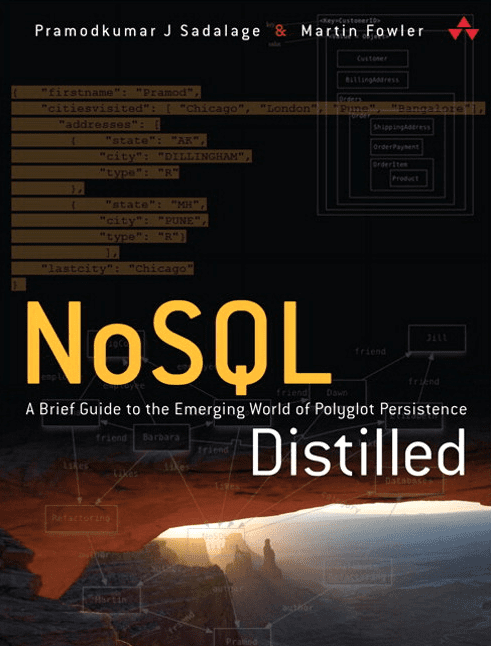
For a solid technical foundation, ‘Designing Data-Intensive Applications’ by Martin Kleppmann is the book most people point to. It is an intense read as it is meant for engineering roles.
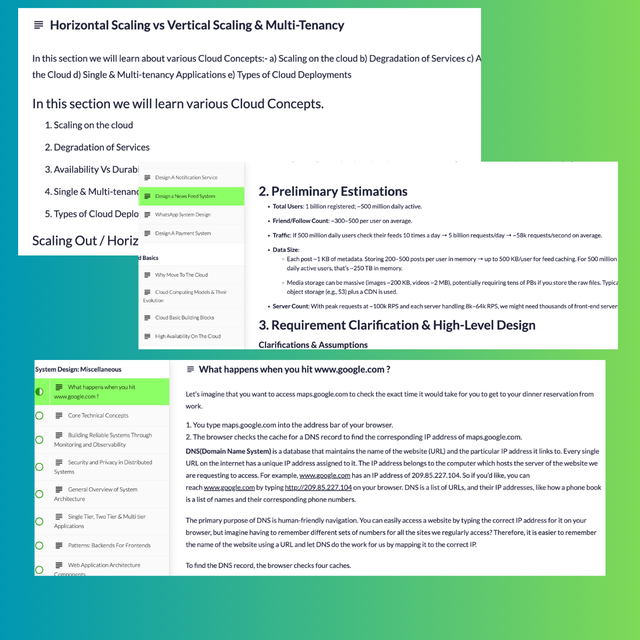
I added 15 modules in ’Ace The TPM Interview’ course to cover the basic concepts above as a foundation and many more as well as 10+ detailed walkthrough examples of a system design flow with diagrams and metrics, costs , explanation of technologies that preps you for an interview or just to upskill in your current job if you are finding it daunting to work with engineers. The way this course is structured is that it doesn’t throw random concepts at you. It builds a mental model of how modern systems work. You go from understanding basic system architecture to how multi-tier applications are structured, how load balancers distribute traffic, and why messaging systems like Kafka or pub-sub models exist in the first place.
As you move through the modules, you start connecting pieces that often feel abstract in isolation. Things like event-driven architecture, WebSockets vs polling, caching strategies, serverless systems, and service mesh communication stop being buzzwords and start making sense in the context of real systems. The API section pulls it all together with REST, CRUD operations, microservices patterns. These are the conversations engineers are already having around you. The difference is, after going through this, you will be able to follow along and ask better questions.
These modules were reviewed and improved by FAANG senior engineers, SDMs, and senior TPMs, to make it as holistic as possible in terms of expectations from different perspectives. I still point my clients to it even if they already have the TPM title to ensure they have a strong foundation or being technical is their vulnerability. For ‘Ace the TPM interview’ and a complete list of available courses, check out the course dashboard.
How Program Managers Build Technical Depth
The most practical way to grow technically is through real exposure, not courses or certifications. Those will help, but in interviews, it will still be real-world experience that they dig into and which will make the difference on the job.
Start in your current role. Ask engineers to walk you through the architecture of what your team builds. Read design documents, then read them again. Read them multiple times and it will start sinking in, even if it feels daunting at the start. Sit in on design reviews even when they go over your head. Listen carefully to how engineers think about tradeoffs, what questions are asked by engineering managers or senior engineers who are reviewing the design. Read the technical documentation beforehand.Design docs, architecture docs, and operational excellence initiatives are great ways to learn.
Ask thoughtful questions to further your understanding. Not basic questions that could be answered with a quick search or a read of the documentation. Your questions will show you’re trying to understand the design beyond what is already explained to you or documented. Over time the vocabulary will become familiar and you will be able to follow more of the discussion.
Exploring AWS services and learning cloud concepts was how this TPM blog website was started as a side-project to solidify learning. A lot of what I do has been out of curiosity to put theoretical learning into practice to see how it works in real life.
Projects That Help With the TPM Transition
Certain projects naturally push program managers closer to TPM work. Look for opportunities to work on infrastructure migrations, platform launches, scalability initiatives, infrastructure optimization opportunities, system re-architecture efforts and internal tooling.
These programs force deeper engagement with engineering teams and system design decisions. They also build credibility with engineers faster than anything else.
Currently, the advent of new AI tools has been breaking down the barriers to entry for TPMs to get their hands dirty with coding. Explore some of them, or at least know the biggest ones and create a trial side project to further your understanding.
Mistakes People Make When Moving Toward TPM Roles
The first mistake is trying too hard to become an engineer. The value of a TPM sits at the intersection of technical depth and program leadership. You do not need to prepare for system design interviews the way a software engineer does. You need to prepare the way a TPM does, which means tradeoffs, dependencies, cross-team coordination, and communication.
The second mistake is avoiding technical discussions because they feel uncomfortable. Some program managers skip design reviews because they feel out of their depth. That is exactly when you should be there. Listening builds familiarity faster than studying. You do not need to have the right answers yet. You just need to be in the room.
How to know if you are ready to be a TPM
If you want to move into a TPM role, the most convincing artifact is the work you’ve already done. While certifications may help get noticed, the hiring manager is looking for a track record and relevant experience. Specifically, examples of leading technically complex programs, moments where you caught architectural risks early, programs where you worked closely with senior engineers, situations where you helped teams align on technical decisions, and cross-team dependencies you managed that had real technical stakes.
If you have multiple examples of these in your interview or transition stories, getting the role becomes much easier. You have to show a consistent track record of this, not just a single instance. It will take time, so be patient. It might take months or a few years. If your company doesn’t have these opportunities, look into a lateral move into a company that has both program manager and technical program manager roles to make the transition internally once you join and learn the ropes.
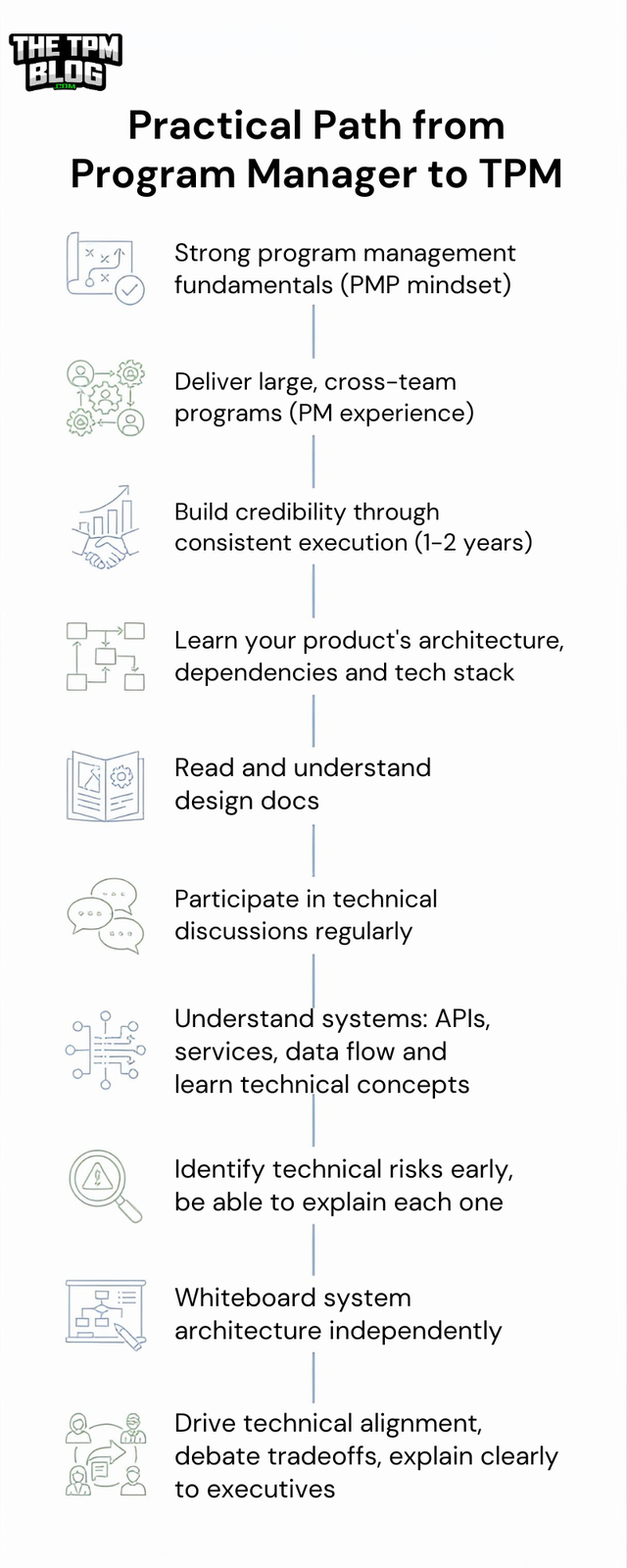
A Practical Path to the TPM Role
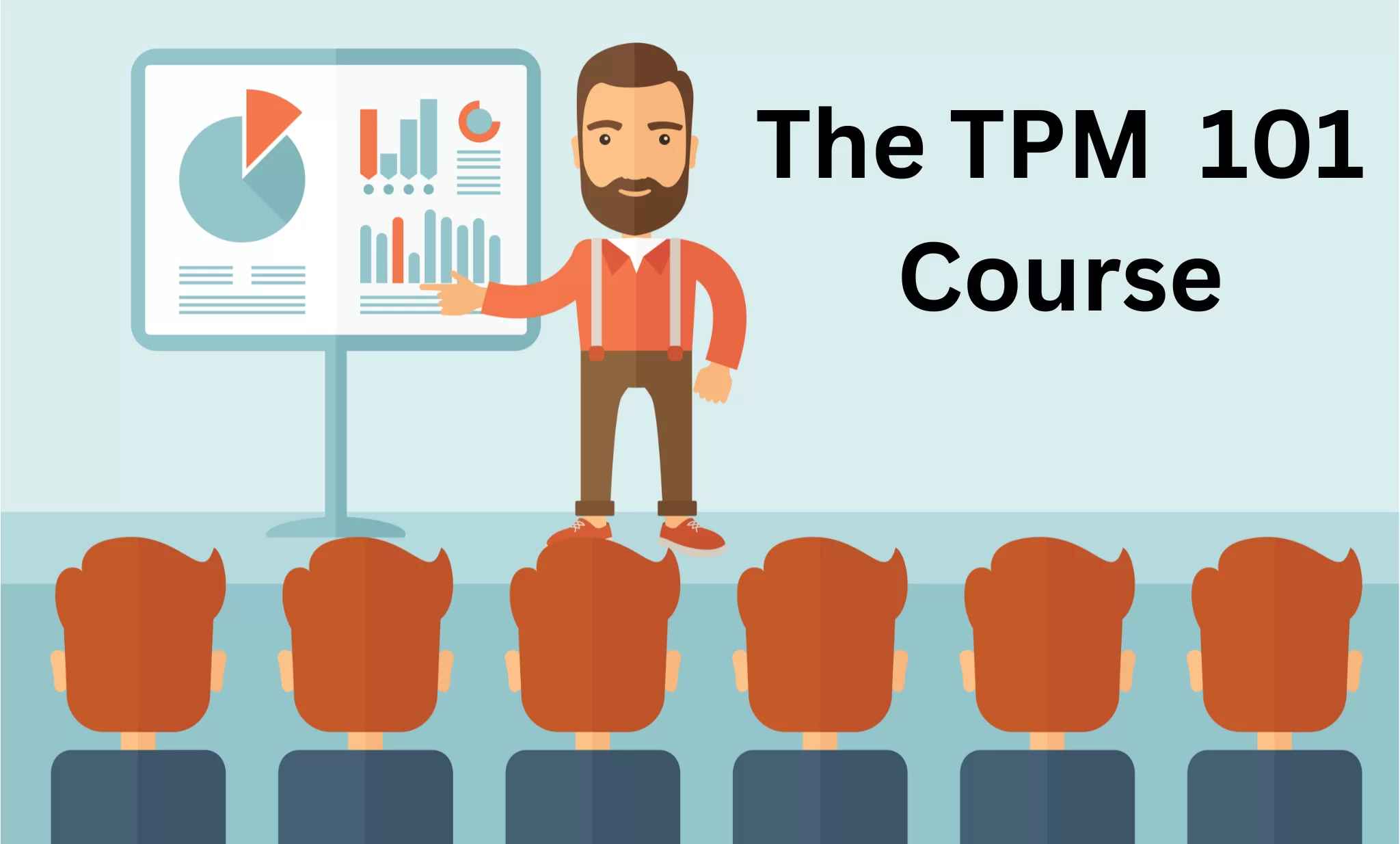
Here is what I tell people when we talk through this one on one. Start by getting solid on core program management fundamentals because that is your foundation. The TPM 101 course covers this in detail and delves into TPM expectations, roles, levels and growth path. It’s a great primer for anyone transitioning into TPM roles or managing a TPM.
Learn the architecture of what your team builds well enough to draw it as a simple box diagram. Sit in on as many design discussions as you can, even the ones that feel over your head. Ask for programs that involve technical complexity like infrastructure, migrations, and platform work. Build trust with engineering teams by showing you have done your homework. Document your experiences as interview stories to gauge how strong they are and what they are missing.
TPM Interview Prep for System Design / Technical Interview
TPM system design interviews are not engineering interviews. You will not be at a whiteboard writing code but you will likely be drawing a box diagram. Larger tech companies will ask you to walk through a system design verbally or on a whiteboard, discuss architectural tradeoffs, or dig into the technical complexity of a past program.
What they are testing is whether you can articulate system design concepts clearly, identify the right risks, and communicate technical constraints to different audiences. Prepare for requirements gathering and scoping, high-level architecture and component interaction, scaling and reliability concerns, and tradeoffs and their program implications. System design is less about specific technology and more about problem solving and technical awareness.
Even without a whiteboard, keep a notebook nearby during verbal technical interview questions to sketch things out for yourself. It keeps your thinking organized especially when answering verbally. It is hard to keep track of all the components you’ve mentioned without a visual reference. You will still need to cover all the same areas. One is not necessarily easier than the other.
Use the system design modules in Ace the TPM interview course which goes through E2E flow that you will be expected to do when asked to design a url shortener, facebook type messenger service, a chat system or Youtube like video streaming service and many more examples to cover the breadth of what TPMs are usually asked. It also covers foundational concepts like APIs, microservices, caching etc.
Hardware-focused TPM roles come with their own flavor of technical interview. Instead of talking through microservices and API latency, you will be expected to discuss where hardware and software meet and how that integration affects program decisions. Interviewers want to see that you understand deployment considerations for physical systems, not just cloud environments, and that you have thought about supply chain and manufacturability constraints as real program risks. Testing methodologies for hardware components come up often too, because the feedback loops are slower and the cost of a missed defect is much higher than in software. Reliability and redundancy in physical systems is another area worth preparing for, since the tradeoffs look different when you cannot push a patch to fix something in the field. The underlying skill they are testing is the same as any TPM interview: can you identify the risks that are specific to this kind of system and manage the program around them.
If you want structured feedback, doing mock interviews with SDMs, TPMs who have conducted multiple hiring interviews are worth the investment. Generic interview prep will not give you the TPM-specific follow-up questions that make a difference. If you can read an architecture diagram, follow a design review, and recognize potential risks, you are on the right track.
Final Thoughts
The shift from program manager to technical program manager rarely happens overnight. It usually starts with curiosity about how systems work. Then comes exposure to engineering discussions. Eventually you begin contributing to those conversations. When engineers see that you understand the system and can help guide large technical efforts, they start treating you differently. Once that happens, you’re already doing much of the TPM job and have enough examples of how you have contributed technically to transition into the role.
The one area of weakness that I constantly see for folks trying to transition into the TPM role, is cracking the system design interview or a technical focused project question. I added multiple sections to my ‘Ace the TPM Interview’ course these last few months to cover this from soup to nuts. You need to specifically prepare for this at the TPM level, as all FAANG companies will test for this and some tech-forward startups or teams will as well. Others will likely ask you to dive into the technically complex architecture flow of a program you delivered. When we do mock interviews, we focus the session on either behavioural or technical to prepare well for these scenarios. Do the same whether it is an internal transition to show the data points to your manager or to uplevel your interview stories when applying externally.
It has not been happening enough yet for TPMs, but I do expect an AI focus to be added to interviews once TPMs in FAANG companies start adopting more AI aspects into their role. This will be more than the routine usage of a GPT for documents, summarizing reports, and generating metrics dashboards.
Ready to rock your TPM Interview?
A detailed interview prep guide with tips and strategies to land your dream job at FAANG companies.
FAQs: Becoming a Technical Program Manager
What does a Technical Program Manager do?
A Technical Program Manager leads complex engineering initiatives that span multiple teams. They combine program leadership with enough technical depth to understand system architecture, technical risks, and engineering constraints.
Can a program manager become a TPM?
Yes. Many TPMs start as program managers. The transition usually involves building deeper technical understanding while continuing to lead complex cross-team programs.
Do TPMs need to know how to code?
Most TPM roles do not require writing production code. However, understanding system architecture, APIs, distributed systems concepts and cloud architecture is important. They must be able to independently draw the entire system design of the services their teams own or a high level flow while knowing the core details of certain technologies, depending on the TPM level.
What technical skills should a TPM have?
TPMs should understand system architecture, service interactions, scalability challenges, reliability considerations, and common distributed systems patterns.
How technical are TPM interviews?
TPM interviews usually test system understanding, technical judgment, and the ability to manage complex engineering programs rather than deep coding ability. They vary from company to company. The job description and the resume/linkedin profile of current TPMs in the company should give you a good idea of how technical they might expect you to be.
What experience helps someone become a TPM?
Leading infrastructure programs, platform launches, system migrations, or scalability initiatives often provide the right experience. Try to gain this experience in your current company by volunteering to help out TPM/engineering teams or take on stretch projects which give you this exposure.
Why do some program managers struggle in TPM roles?
The biggest challenge is often lack of technical depth and context. TPMs need enough technical understanding to follow architecture discussions and identify risks early. They need to be able to quickly grasp the architecture as they are already familiar with system design concepts and cloud architecture.
What industries hire the most TPMs?
Large technology companies(usually FAANG), cloud providers, infrastructure teams, and AI or platform organizations tend to hire the most TPMs. Experience in leading projects relevant to these domains will help you. Technical startups also bias towards hiring TPM, but expect a bit more engineering skills. They use program managers for less technical aspects like customer onboarding, project coordination, vendor management etc.
How do I prepare for the TPM system design interview?
For a holistic approach and a focused quick start, use the system design modules in Ace the TPM interview course. This will go through E2E flow that you will be expected to do when asked to design a url shortener, facebook type messenger service, a chat system or you tube like video streaming service and many more examples to cover the breadth of what TPMs are usually asked. It also covers foundational concepts like APIs, microservices, caching etc. Once you have covered these, do mock interviews with seasoned TPMs, hiring managers to get over your nerves, identify blind spots, what you do well and pinpoint your focus areas. This is a game changer to stay on time, cover all the expected criteria and get solid practice.
Author

Preetha Annamalai
Preetha is an ex-Amazon Sr Manager, with 18+ yrs of experience leading cross-functional software, TPM, and product teams. She specializes in driving strategic initiatives, fostering innovation, building high-performance teams, helping professionals reach their full potential.

Mario Gerard
Mario Gerard is a Senior Staff Technical Program Manager (TPM) at Google and has been in the tech industry for over 20 years. He is an active blogger and podcast host.