
Last updated on March 12th, 2026 at 12:08 am
Your boss can be a ladder or a lid. If you want faster promotions, career growth opportunities, better visibility, and real advocacy at work, you need a boss who champions you. Most people underestimate the importance of a good relationship with their manager at work. It’s not about sucking up. It’s about managing up. Your happiness at work depends largely on the trust and respect you have with your manager. It’s a game-changer to your well-being, creativity and career momentum. Let’s dive into how to make it happen in this short post.
The FAN Method
F – Find Their Pressure Points
Every manager has a set of silent stressors. Maybe it’s delivering results to an executive, smoothing out team drama or just getting through Monday. Learn what actually matters to them. Ask questions like:
- “What’s top of mind for you this quarter?”
- “What would success look like if we nailed this project?”
- ” How would you like to stay updated on this program?” . Understand their communication cadence and style(email/slack etc.) expectations.
Make sure they are not surprised and get critical updates early. Pay attention to what they repeatedly mention. That’s your clue. Follow it up with actions on to take some of the load off their plate.
A – Add Strategic Value
You’re not just here to complete tasks. You’re here to remove obstacles, deliver outcomes, and make your manager look like a genius.
What you can do:
- Offer to take ownership of recurring pain points.
- Connect your work to bigger team/organizational goals.
- Anticipate problems and bring solutions—not more problems.
N – Narrate the Wins
Even the best work gets missed if you don’t shine a light on it. Make your impact visible:
- Send crisp updates with metrics and outcomes.
- Frame your work as a win for the team, not just yourself.
- Make it easy for your boss to brag about you.
Example: “Hey, just a heads-up—wrapped the feature 2 days early. Also included a metrics dashboard that’ll save 3 hours/week in reporting.” That’s music to a manager’s ears.
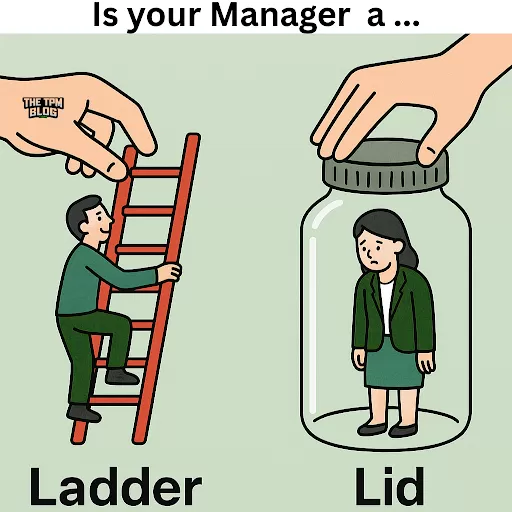
Ask yourself, is your Manager a Ladder or Lid for you? Take a look at the tips below and try some of the ideas in this article to make the relationship work for you. It will take a few weeks or months, but stick to it and you will slowly see the trust increase from both sides.
Managing Up for TPMs – Tips
There are a multitude of small actions that have a huge impact. Incorporate these into how you work and you will notice a difference.
Praise works both ways
When your boss makes a great call, recognize it. A quick “Thanks for backing me up in that meeting—it made a huge difference.” note helps build mutual respect.
️Think one level up
Zoom out. Understand what your manager’s manager wants. Align your work accordingly.
Be low maintenance
Keep your manager informed, not overwhelmed. Share key updates and decisions proactively. Skip the details unless they matter. Avoid oversharing—offer context, don’t make it a therapy session.
Align your goals
Ideally, your KPIs should either mirror your manager’s or be a subset that clearly ladders up to theirs. If that’s not the case, initiate a focused conversation to make sure you’re both working toward the same definition of success.
Give credit to others
If someone else contributed, highlight their contribution as well. ” X had the original idea, I just built off it” shows leadership and humility.
Be self-critical
Proactively bring up any mistakes and your lessons learned from it. Be candid on what went wrong, and take ownership for it. When you lead the conversation on these tricky topics, your manager can already see that you have thought through it, analyzed and come up with solutions to mitigate it happening again. It shows self-awareness and maturity.
Challenge Thoughtfully
Don’t default to yes. Bring data, offer alternatives, and respectfully question decisions to strengthen outcomes. Managers value critical thinkers who have different opinions and challenge their ideas to find blindspots and make the overall proposal better. They look for that in reviews, brainstorming and even normal 1on1s to confirm/disconfirm their beliefs.
Bring Positive Energy
Attitude matters a lot at work. Just like COVID, your attitude and mood will spread. Happiness is contagious and pessimists are less likable. Everyone has 99 problems, so they gravitate towards anyone who is not complaining and is able to elevate their mood. You don’t need to be toxically positive or pretend. Try not to take your bad mood, frustration out at work and temper your cynicism. Leaders manage their emotions well and are usually looked on as the calming influence in the team.
If they are not a fan yet…
Sometimes, managers are tough nuts to crack. Don’t force it. If they seem resistant or indifferent:
- Don’t personalize it. Some managers are focused on outputs, not relationships.
- Find common ground. Align on shared goals or KPIs that matter to both of you.
- Build credibility laterally. Strengthen your relationships with peers and cross-functional leaders.
- Keep a record of your impact. In low-visibility situations, documentation is your best advocate.
- Seek external advocates. Mentors, skip-level leaders, or internal sponsors can help champion your work if your manager won’t.
- Look for blindspots. Seek to understand if they seem resistant because you are not yet delivering per their standard or are missing an expectation they have of you. Introspect to find out if their hesitation is based on a skill you are still working on or if they want you to focus on something specific. Have open conversations to get feedback on where you can do more or improve.
If you have a rocky relationship…
You can still grow and thrive even if your current manager isn’t your cheerleader—just make sure your value is visible elsewhere.
Focus on the Positives. Start by mentally listing at least 5 positive traits your manager possesses, even if it’s challenging. This helps shift your mindset from frustration to appreciation each time you interact with them.
Assume positive intent. For example, if you feel your manager is not giving you opportunities to present at larger meetings or micromanaging you. Step back and try to understand the bigger picture of what might be motivating that. Is it because they do not trust you, or is it because their manager is micromanaging them or expecting them to be involved firsthand with every project which in turn leads to them stepping on your toes and limiting your opportunities. This is a lack of unique scope problem between your manager and you where boundaries have to be moved to make space for both of you to grow and perform well.
Optimize your 1-on-1 time
Ask questions, get feedback and seek to understand where you can add value. Use these conversation starters:
- “Hey, I noticed X is a priority for you, here’s one way I think I can help…”
- “Would it be helpful if I took ownership of Y so you can focus on Z?”
- “Just looping you in early, here’s what I’m planning and why…”
Conclusion
You don’t need to suck up or overwork. You need to think strategically, communicate clearly, and build mutual trust. Just doing your job isn’t enough- that’s what you are already paid to do. If you want more(money, title, recognition), you have to exceed expectations and lift others around you. Remember, managers want you to grow and succeed. That’s what most of them find most fulfilling about their job. Hopefully this article helps you connect with them and keep your career growth on track.
When your manager wins because of you, they’ll make sure you win too. Turn them into your biggest lift, not your biggest limit.
Ready to fast-track your career?
Get personalized advice from ex-Amazon Sr. Mgr. Preetha to raise the bar in your current role and get promoted.
FAQs: Managing your Manager
What does “managing up” actually mean in practice?
Managing up means understanding your manager’s goals, pressures, and priorities, and aligning your work to help them succeed. It involves proactive communication, anticipating risks, and solving problems before they escalate so that your manager can focus on higher-level priorities. You become a trusted, reliable ally for your manager and your skip manager.
How can you figure out what matters most to your manager?
Pay attention to what your manager repeatedly emphasizes in meetings, goals, or updates. Asking direct questions such as “What does success look like this quarter?” or “How would you like to be updated?” can reveal their priorities and communication preferences.
What are the most effective ways to impress your manager at work?
Deliver outcomes, not just tasks. Anticipate problems, take ownership of recurring issues, and connect your work to broader team or business goals. Managers value employees who reduce friction and move initiatives forward. Everyone is paid to do their job. The ones who stand out are the ones who do more than what is expected of their role.
Why is it important to “narrate your wins” to your manager?
Managers often oversee many projects simultaneously. If your impact is not visible, it may be overlooked. Sharing concise updates with metrics or outcomes helps your manager advocate for you during performance reviews and promotion discussions. A written record will also help you craft your annual performance summary.
How do you keep your manager informed without overwhelming them?
Focus on highlights, not noise. Share key updates, decisions, risks, and milestones. Avoid unnecessary details on the how/details unless they affect delivery, deadlines, or stakeholder expectations. Be clear whether you are providing an update or asking for their help. This is important to clarify.
What role do one-on-one meetings play in building a strong relationship with your manager?
One-on-ones are the best opportunity to clarify priorities, ask for feedback, and identify ways to take ownership of meaningful work. Used well, they help align expectations and build trust over time. Ask your manager for feedback on what you are doing, ask them for ideas on how you can contribute more or make it conversational and ask them what their biggest challenges are this quarter. This is a great question for your skip manager as well.
How can you challenge your manager’s ideas without damaging the relationship?
Present thoughtful alternatives supported by data or reasoning. Managers value team members who offer constructive disagreement because it helps reveal blind spots and leads to better decisions. When doing so, frame it as offering another way of looking at things or ‘should we consider …’ to keep it professional and growth oriented.
What should you do if your manager is not supportive of your growth?
Focus on building credibility through consistent delivery and documented impact. Strengthen relationships with peers, cross-functional leaders, or mentors who can advocate for your work if your manager does not. Document your successes(with impact) and send them as monthly updates to your manager in an email or bring to your 1on1.
How do you align your goals with your manager’s goals?
Ensure your objectives clearly support your manager’s priorities or team KPIs. When your work directly contributes to their success metrics, it becomes easier for them to champion your contributions. Think of your success metrics being a ladder(or a sub metric) to theirs. Make sure your performance is measurable in some way – project delivery, project impact etc. Ask your manager candidly in your 1on1 on how your goals align with their overall team goals if you aren’t able to make the connection.
How long does it take to build trust with your manager?
Trust develops gradually through consistent behavior. Regular communication, ownership of outcomes, and reliability are built over months. You need to show consistency over a long period of time, while working independently with less need for oversight as you keep your manager updated.
Author